
Catchment
How to Collect Rainwater from Your Roof
Gutter sizing, downspout positioning, first-flush diverters, and roof materials that are safe for catchment in a Canadian climate.
Read article →A practical reference for rural landowners in Canada on roof catchment systems, storage options, filtration, and provincial regulations covering rainwater use.

Overview
Rural properties across Canada — particularly in British Columbia, Ontario, Alberta, and the Maritime provinces — often sit beyond municipal water service areas. Groundwater wells are common, but shallow aquifers can be unreliable during dry summers or contaminated near agricultural land.
Rainwater harvesting offers an additional supply that can reduce pressure on wells, support irrigation, and in properly filtered configurations, supplement household use. In parts of Canada that receive 600–1,000 mm of annual precipitation, a 100 m² roof surface can collect meaningful volumes across a season.
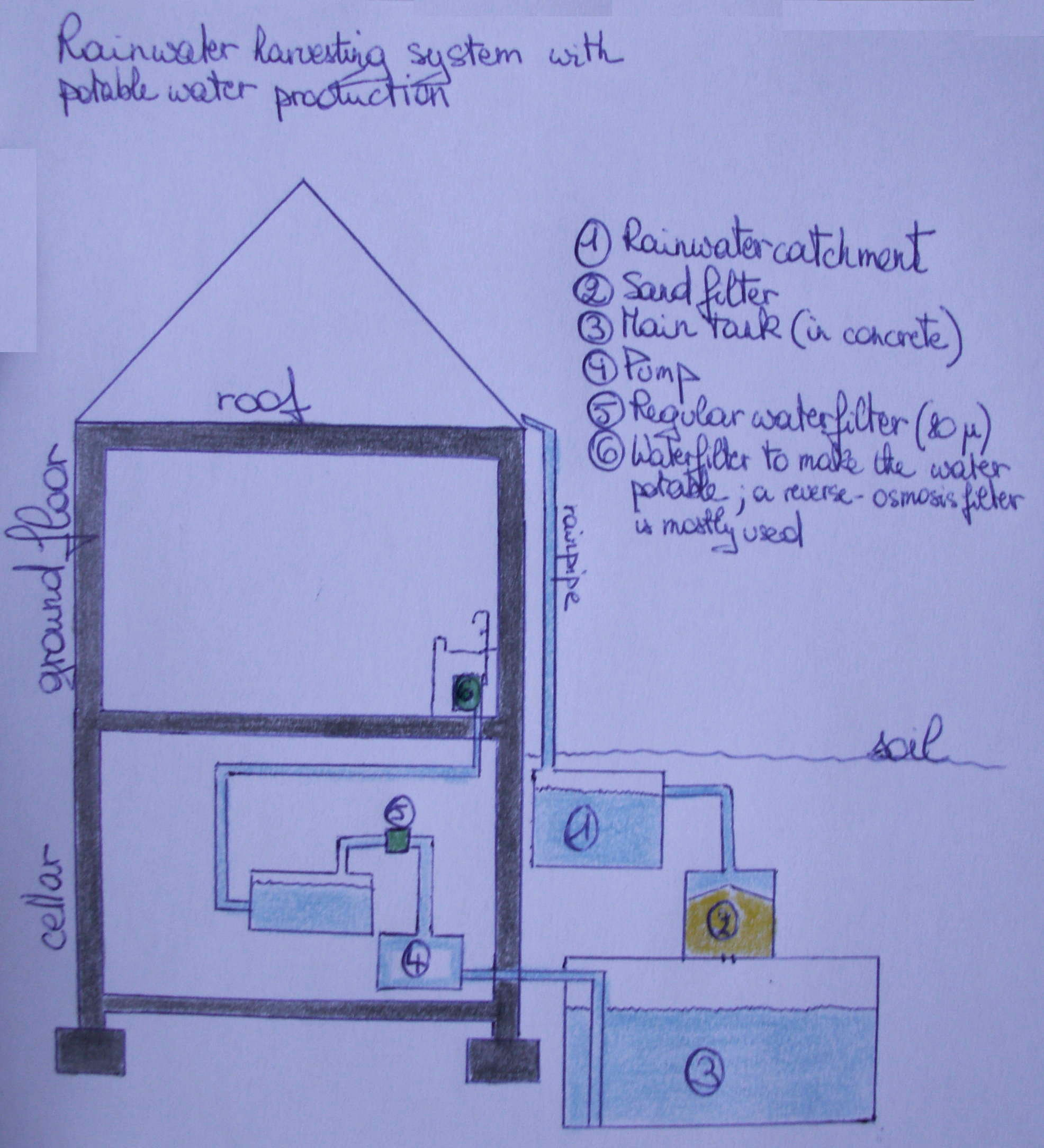
This reference covers the three core elements of any rural rainwater system: the catchment surface and guttering, storage tanks, and filtration appropriate to the intended end use.
Articles
Detailed articles on the practical aspects of designing, installing, and maintaining a rainwater harvesting setup for a rural property.
Gutter sizing, downspout positioning, first-flush diverters, and roof materials that are safe for catchment in a Canadian climate.
Read article →
Comparing polyethylene tanks, IBC totes, corrugated steel cisterns, and underground concrete tanks for rural rainwater storage in cold climates.
Read article →
Sediment pre-filters, activated carbon, UV disinfection, and when collected rainwater is appropriate for potable versus non-potable applications.
Read article →Key Considerations
Coastal British Columbia receives over 1,200 mm annually in many areas. Interior regions of Alberta and Saskatchewan may see under 400 mm. System sizing should reflect local precipitation data from Environment and Climate Change Canada.
Most Canadian rural properties experience hard freezes. Above-ground plastic tanks must be drained or insulated before winter. Underground cisterns below the frost line remain accessible year-round but require careful installation.
There is no single federal framework for rainwater collection in Canada. British Columbia's regulations differ from Ontario's. Some provinces permit roof-collected water for outdoor and non-potable indoor use; potable use is more strictly regulated.
Asphalt shingles, metal roofing, and clay tiles each carry different contamination risks. Older asphalt shingles may leach compounds not suited for drinking water. Metal roofing is generally the preferred surface for potable catchment.
The first portion of rain after a dry period carries the highest concentration of dust, bird droppings, and roof debris. First-flush diverters automatically shed the initial 10–25 litres per 100 m² of roof area before directing water to storage.
Garden irrigation requires basic sediment filtration. Toilet flushing adds a simple carbon stage. Potable use requires multi-stage treatment including sediment, carbon, and UV disinfection — and in most Canadian provinces, regulatory review.